Advancing Appropriate Care Under the WISeR Model
Our Role in WISeR: What We Do, How It Works, and Where to Get Help
Waste in healthcare can expose patients to unnecessary risk and drive costs without improving outcomes. Estimates suggest that a significant share of U.S. healthcare spending, potentially up to 25%, is tied to services that add limited clinical value, do not align with specific patient needs, or can lead to avoidable complications and additional interventions. According to a 2023 Bipartisan Policy Center report, programs such as Medicare are not sustainable long term without finding ways to reduce inappropriate care.
To address this, the Centers for Medicare & Medicaid Services (CMS) launched the Wasteful and Inappropriate Service Reduction (WISeR) Model. WISeR is designed to support patients, providers, and taxpayers by using technology-assisted clinical review to encourage timely, appropriate Medicare payment for select items and services.
Today, the WISeR Model operates in six states, including New Jersey, Ohio, Oklahoma, Texas, Arizona, and Washington, and is set to run through December 31, 2031.
Why Virtix Health Joined WISeR
Virtix Health is proud to serve as a CMS-selected participant in the WISeR Model in Washington State. Since the program launched on January 5, 2026, we have been focused on making prior authorization faster, clearer, and more transparent for the providers and patients we serve. Here is how the process works — and where to turn when you need support.
We have spent years helping payers and providers work together more efficiently, bringing technology and clinical expertise to decisions that affect patient care and the long-term sustainability of Medicare. When CMS invited participants to join WISeR, we saw an opportunity to show that prior authorization, done well, can protect patients, support providers, and help ensure Medicare remains viable for future generations. We joined because we believed we could do this work with speed, accuracy, and respect for everyone involved.
How the Prior Authorization Process Works
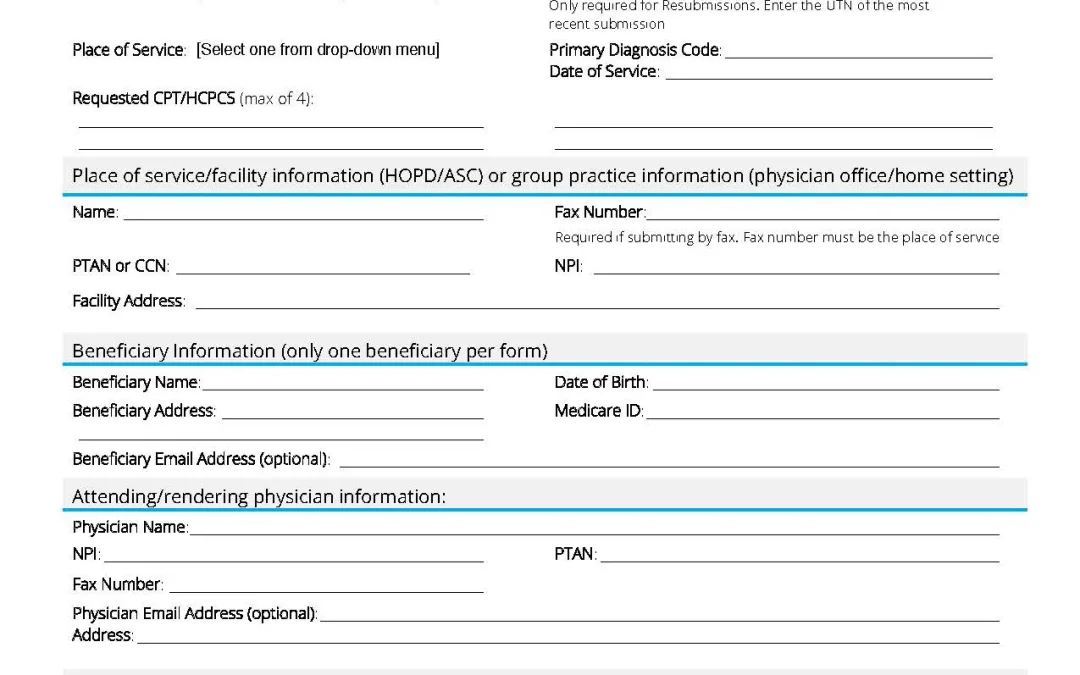
When a provider submits a prior authorization request for a WISeR-covered procedure within the Virtix Health Provider Portal, it enters our technology platform, where we first validate key information such as Medicare enrollment status, provider credentials, and procedure eligibility. Our technology then reviews the submitted clinical documentation against coverage criteria that pre-dates WISeR, not by Virtix Health. These criteria are based on Medicare guidelines.
This is especially important for high volume cases such as epidural steroid injections for back pain. In these cases, coverage depends on accurate and complete documentation that supports the required criteria.
Most cases that meet the documentation criteria receive an affirmation quickly, often the same day, and in the majority of situations, decisions are made in less than 2.5 days. Cases needing additional review are evaluated by our board-certified physicians, who examine the chart directly and make a determination. Our average turnaround time has declined significantly since program launch — from a peak of 8.97 days in the first weeks of operation to 0.51 days by Week 11, well within the three-day standard outlined in the WISeR Participant Guide. If a case is not affirmed, it is most often because the submitted documentation does not yet fully support the required criteria. Providers can resubmit with additional documentation or request a peer-to-peer discussion with one of our board-certified physicians to understand exactly what is needed.
Under WISeR guidelines, AI cannot issue a non-affirmation or denial; it can only affirm requests. No patient is denied care by an algorithm, and every non-affirmation involves a physician who reviews the case and applies the relevant coverage criteria.
Once we issue a determination, the case is transmitted to Noridian, Washington’s Medicare Administrative Contractor (MAC), which assigns a Unique Tracking Number (UTN) within a 48-72 hour window, on top of the initial three-day period. Timeframes vary based on select cases where supporting data, enrollment, or claim submission discrepancies are evident and may require additional review, as warranted. The UTN is required for claim payment and links the prior authorization decision to the final claim. Noridian’s UTN issuance is a separate step from our review and one we do not control. For questions about UTN status or claim processing, Noridian’s provider services team can be reached at 877-908-8431.
What We Want Providers and Suppliers to Know
The success of the WISeR Model depends on collaboration among technology partners, the designated MAC, providers, and the patients we collectively serve. Technology can streamline prior authorization and increase visibility, but the value of WISeR lies in the shared processes and understanding, as well as the commitment to appropriate, patient-centered care.
We are dedicated to reducing turnaround times where possible, delivering consistent and clinically sound evaluations, and equipping providers with the information they need to navigate prior authorization successfully. Case status is available at any time within the Virtix Health Provider Portal. If you are experiencing delays or have questions that require additional support, our team is available at wiser.support@virtixhealth.com or 833–943–2209. The sooner we hear from you, the sooner we can identify where a case stands and help resolve any issues, whether they sit with us or elsewhere in the process.
We are here to help care happen: quickly, accurately, and in accordance with the criteria that govern this program. That has been our goal from day one, and it remains our commitment.
For more information about the WISeR program, visit CMS.gov or contact CMS directly for program‑level inquiries.